
+91 9655141888 | kiruthikaenterprisespld@gmail.com

Introduction
An RO (Reverse Osmosis) water purifier is essential for providing clean, safe, and healthy drinking water. However, over time, filters, membranes, and other components wear out, reducing the purifier’s efficiency. Ignoring these early warning signs can affect water quality, increase maintenance costs, and shorten the lifespan of your purifier.
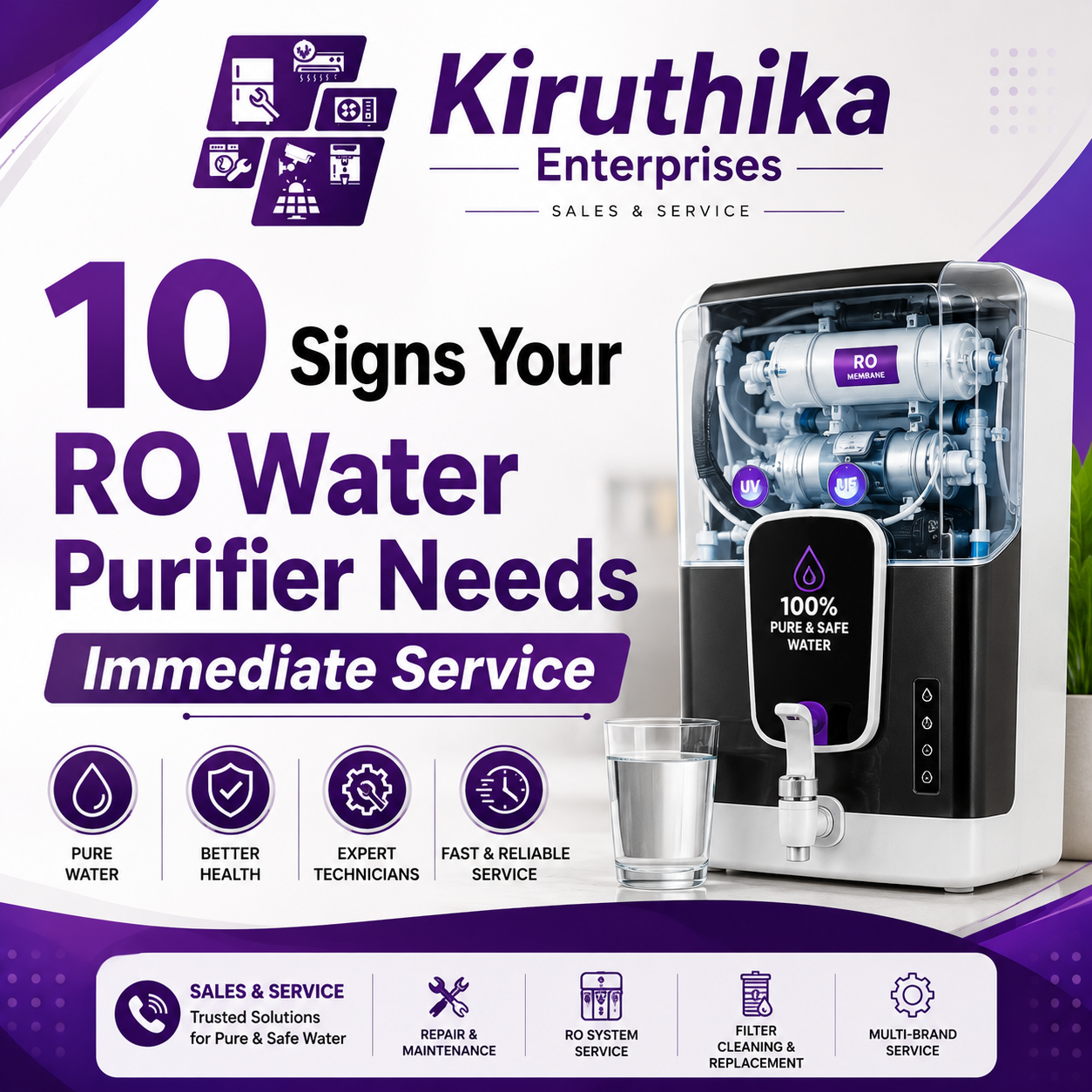
In this blog, we’ll discuss the 10 signs your RO water purifier needs immediate service and explain why regular maintenance is important for ensuring safe drinking water.
1. Bad Taste or Unpleasant Odour in Water
Clean drinking water should always taste fresh and have no unusual smell. If your RO water starts tasting salty, metallic, bitter, or develops an unpleasant odour, it’s often a sign that the filters or RO membrane are no longer working effectively. These components naturally wear out over time as they remove impurities from the water.
Replacing worn filters and servicing the purifier can restore water quality and ensure your family continues to receive safe drinking water.
2. Slow Water Flow
A noticeable reduction in water flow is another common indication that your RO water purifier needs attention. If it takes much longer than usual to fill a glass or bottle, the sediment filter, carbon filter, or RO membrane may be clogged with impurities.
Slow water flow may also result from low inlet pressure or internal blockages. Regular maintenance helps identify the exact cause and restores the purifier’s normal performance.
3. Water Leakage Around the Purifier
Water leakage should never be ignored, even if it appears to be minor. Leaks can occur due to loose pipe connections, damaged O-rings, cracked filter housings, or worn-out valves.
Apart from wasting water, continuous leakage can damage nearby furniture, walls, and electrical fittings. Having the purifier inspected promptly can prevent further damage and costly repairs.
4. Unusual Noises During Operation
RO water purifiers usually produce a low humming sound while operating. However, loud vibrations, clicking noises, or continuous pumping sounds may indicate a faulty pump, air trapped inside the system, or clogged filters. Ignoring these sounds can lead to more serious mechanical issues, so it’s best to have the purifier inspected as soon as possible.
5. Filters Haven’t Been Replaced on Time
Filters are the heart of every RO water purifier. Over time, sediment and carbon filters become clogged with impurities, reducing their ability to purify water effectively. Most filters should be replaced every 6 to 12 months, depending on water quality and usage. Delaying replacement can affect both water quality and the overall performance of the purifier.
6. Increased TDS Levels
If the Total Dissolved Solids (TDS) level of purified water starts increasing, it may indicate that the RO membrane or filters are no longer functioning efficiently. A simple TDS test can help identify whether your purifier is delivering safe drinking water. Regular servicing ensures the system continues to remove harmful contaminants effectively.
7. Purifier Runs Continuously
A properly functioning RO purifier automatically stops once the storage tank is full. If your purifier keeps running continuously, it could be due to a faulty pressure switch, automatic shut-off valve, or internal leakage. Continuous operation increases electricity consumption and places unnecessary stress on the purifier’s components.
8. Storage Tank Takes Too Long to Fill
If your purifier takes much longer than usual to fill the storage tank, clogged filters, a worn-out membrane, low water pressure, or a weak booster pump could be the cause. Timely maintenance helps restore normal water flow and prevents additional damage to the system.
9. It’s Been More Than a Year Since the Last Service
Even if your RO purifier appears to be working normally, regular preventive maintenance is essential. Over time, dust, sediments, and mineral deposits accumulate inside the purifier, affecting its performance. Scheduling professional servicing every 6 to 12 months helps maintain water quality, improve efficiency, and extend the lifespan of the purifier.
10. Service Indicator Light Is On
Many modern RO water purifiers come with service indicators that notify users when maintenance is due. Ignoring these alerts can reduce purification efficiency and increase the risk of component failure. If your purifier displays a service warning, it’s a good idea to schedule maintenance promptly.
Why Regular RO Water Purifier Servicing Matters
Routine servicing helps keep your RO water purifier operating efficiently and ensures a continuous supply of clean drinking water. Regular maintenance not only improves purification performance but also extends the lifespan of filters, membranes, and other components.
Some key benefits of regular RO servicing include:
- Improves water quality and taste
- Extends the life of the purifier
- Reduces the risk of costly repairs
- Maintains optimal water flow
- Improves energy efficiency
- Ensures safe and hygienic drinking water
Conclusion
Your RO water purifier plays a vital role in providing clean and safe drinking water, but it requires regular maintenance to perform efficiently. Ignoring warning signs such as slow water flow, unusual taste, water leakage, or increased TDS levels can affect both the purifier’s performance and the quality of your drinking water.
By recognizing these signs early and scheduling timely servicing, you can extend the lifespan of your RO system, maintain optimal purification, and avoid costly repairs. Regular maintenance not only ensures consistent water quality but also helps keep your purifier operating efficiently for years to come.
Frequently Asked Questions
1. How often should an RO water purifier be serviced?
Most RO water purifiers should be serviced every 6 to 12 months, depending on water quality, usage, and the manufacturer’s recommendations.
2. What are the signs that my RO filter needs replacement?
Common signs include bad taste or odour, slow water flow, increased TDS levels, and reduced purification performance.
3. Can I service my RO water purifier myself?
Basic cleaning can be done at home, but filter replacement, membrane inspection, and system servicing should be performed by a qualified technician.
4. Why is my RO purifier making unusual noises?
Unusual sounds may indicate air trapped in the system, clogged filters, pump issues, or pressure-related problems that require professional inspection.
5. Why is regular RO maintenance important?
Regular maintenance helps maintain water quality, improves purifier efficiency, extends the lifespan of components, and reduces the chances of unexpected breakdowns.